The power and potential of immersive and experiential learning
Engaging students, learners or trainees is tough in the age of doom scrolling, AI and short attention spans. Two proven effective teaching approaches that create meaningful and impactful learning experiences though, are: immersive and experiential learning.
These methods, along with scenario-based learning, actively engage learners, encourage practical application of knowledge, and foster critical thinking skills, regardless of the subject or age of the learner. Both approaches have unique benefits that can significantly transform the learning experience.
In this blog, we will explore these two methods, discuss their distinct qualities, and show you how they can enhance learning outcomes in different contexts.
What is experiential learning?
Often than not, experience is the best teacher – that’s the idea behind experiential learning. Using the experiential learning process, educational theorist David Kolb suggests emphasizing hands-on, real-world experiences as the primary means of acquiring knowledge and skills.
Whether through internships, or undergraduate research, experiential learning opportunities requires individuals to take part in events or activities and reflect on the insights gained throughout the process. Key features of experiential learning include:
- Active engagement: Experiential learning places learners at the center of the learning process, prompting student engagement actively with practical activities and real-world challenges.
- Critical reflection: Learners are encouraged to reflect critically on their experiences, identifying insights, patterns, and areas for improvement. Reflection bridges the gap between theory and practice, fostering deeper understanding.
- Application of knowledge: Experiential learning emphasizes the practical application of theoretical concepts, enabling learners to transfer knowledge to real-world contexts.
- Collaboration: Many experiential learning activities involve an element of student teaching – collaboration with peers, promoting teamwork, communication skills, and the exchange of diverse perspectives.
What is immersive learning?
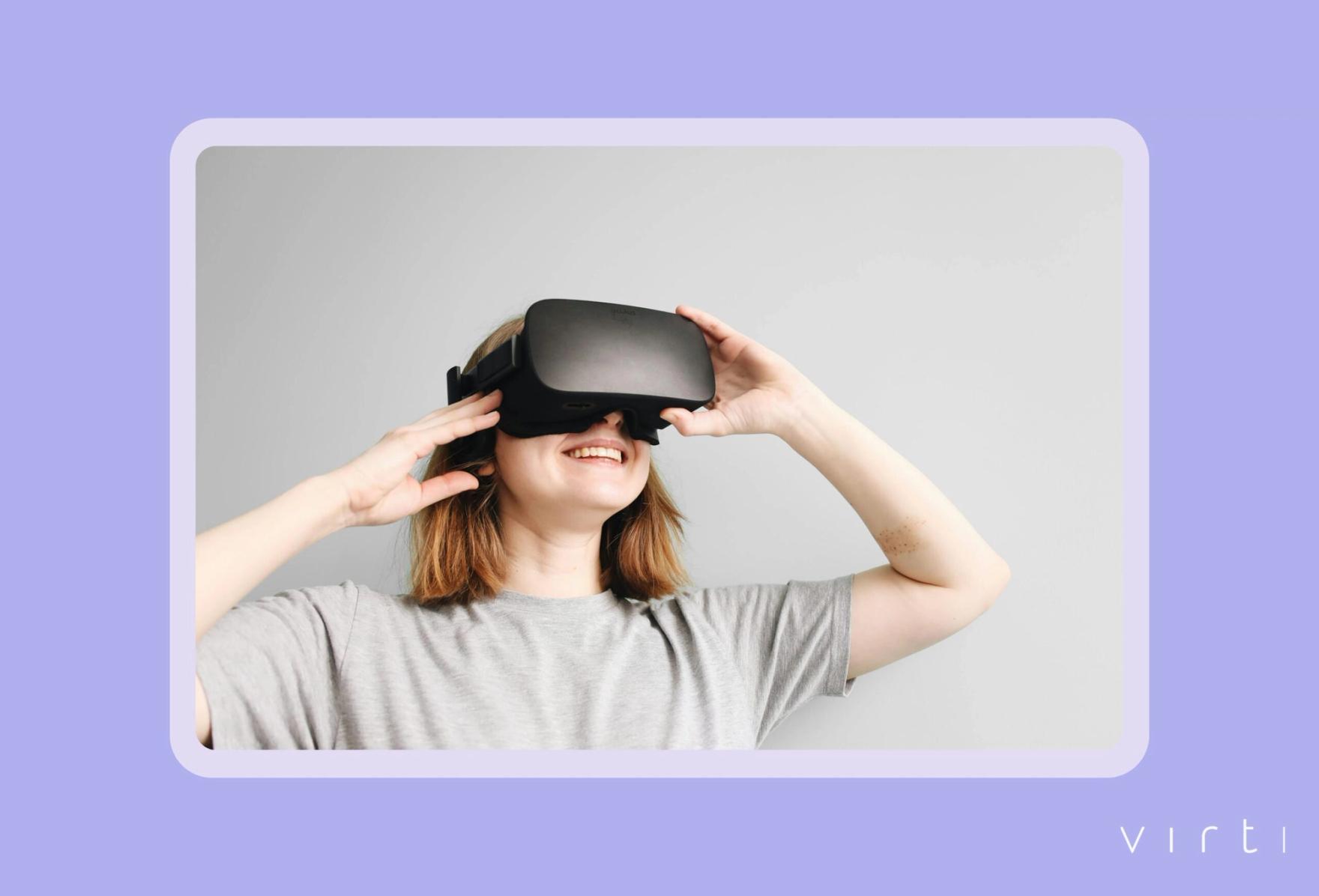
Immersive learning is a teaching method that creates a simulated or virtual environment, replicating real-world scenarios. It uses advanced technologies like virtual reality (VR), artificial intelligence (AI), or augmented reality (AR) to make learners interact with content in a realistic and engaging way.
Immersive learning is useful for deep learning and various activities such as exploring historical landmarks, practicing surgical procedures, or simulating business negotiations. It provides a safe space for direct experience and learning from mistakes, without any risk of harm.
Key features of immersive learning include:
- Active experimentation: Immersive learning environments simulate real-world scenarios, allowing learners to experiment with elements and experience consequences in a controlled setting.
- Engagement: By leveraging multimedia elements, immersive learning captures learners’ attention and maintains their engagement through interactivity building authentic learning experiences.
- Personalization: Immersive learning experiences can be tailored to individual learning styles, offering adaptive feedback and challenges based on their progress.
- Risk-free exploration: Students participate in learning without fear of failure, enabling them to learn through trial and error in a low-stakes environment.
The synergy of experiential learning and immersive learning
The best learning outcomes are achieved by blending immersive and experiential learning. Using immersive education tools to supplement real-world experiences creates the most effective learning environments. By integrating immersive technologies into experiential learning activities, educators can enhance the authenticity and scalability of real-world simulations.
For example, a medical student may engage in hands-on experiences using simulators (immersive learning) before shadowing experienced surgeons in a clinical setting (experiential learning). This combination allows learners to develop technical skills in a risk-free environment while also gaining insights into the complexities of patient care, teamwork, and community partners. Such integration supports knowledge retention and meaningful learning by connecting learning objectives to real life situations, guided by a skilled facilitator.

Wrapping it up
In conclusion, experiential and immersive learning are powerful methods for bridging theory and practice. Combining immersive experiences with scenario-based training offers learners a rich, holistic learning experience that prepares them for real world situations. This approach promotes hands on learning, critical reflection, and meaningful learning outcomes. Plus, these high impact practices build essential soft skills and self confidence.
This blended approach empowers learners to develop situational awareness, apply new knowledge, and thrive in diverse learning contexts, including online learning and adult education.