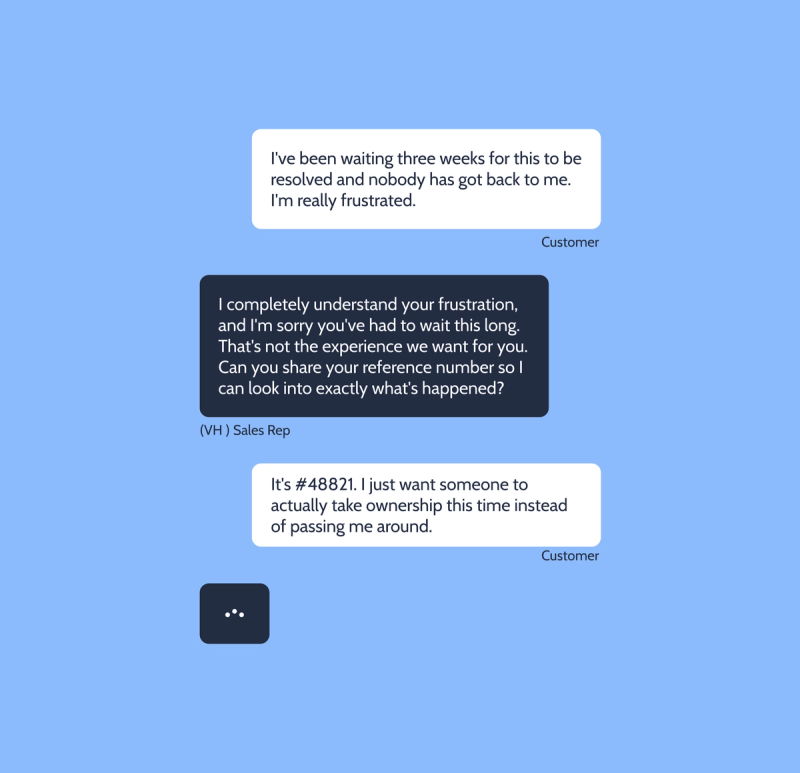
There is a performance conversation a manager has been putting off for three weeks. They know what needs to be said. They have drafted it in their head a dozen times. But every time the moment arrives, something stops them: the timing feels wrong, the words feel too risky, or they convince themselves the situation might resolve itself.
It rarely does. And the longer it waits, the harder it gets.
The ability to have difficult conversations is one of the most important leadership skills there is, and one of the hardest to develop through typical training. You can't build it by reading about it. You build it by doing it, repeatedly, in conditions realistic enough to matter.
That's what we're here for. Below are six role play scenarios every leader should try, plus how to prepare for tough conversations and get the most from every practice session.
Your Learning Path
- Why difficult conversations are the hardest leadership skill to develop
- The six difficult conversation scenarios every leader should practise
- How to prepare for a difficult conversation
- How to run role play scenarios that build real confidence
- How AI roleplay takes leadership conversation practice further
Why Difficult Conversations Are the Hardest Leadership Skill to Train
Most leadership development programmes cover difficult conversations. Very few of them prepare leaders to actually have them.
The gap is practice. A workshop on giving feedback builds awareness of what good feedback looks like. It doesn't build the composure to deliver it clearly and calmly to someone who becomes defensive, dismissive or upset. That composure only comes from experience, and the only way to gain that experience without real world consequences is through realistic role play.
Part of the challenge is emotional. Fear of getting it wrong, of damaging a relationship or of facing strong feelings in the room leads many leaders to delay, soften or avoid the conversation altogether. Practice is what turns that fear into familiarity.
The other challenge is realism. When a colleague plays the defensive team member, both people know it isn't real. The emotional weight is different. The instinct to avoid or soften is different. And the practice produces different results.
For a deeper look at why practice is the foundation of leadership skill development, read our guide to developing leadership skills through real practice.
Difficult Conversation Role Play Scenarios Every Leader Should Practise
These six scenarios cover the leadership conversations that most commonly go wrong, either because they're avoided entirely, delivered too softly to land, or handled in a way that damages the relationship rather than solving the problem. Each one is specific enough to practise against and flexible enough to adapt to your organisation's context.
Scenario 1: Delivering Critical Feedback to a Defensive Team Member
The leader needs to deliver feedback about a specific behaviour or performance issue. The team member responds defensively, explaining, justifying or deflecting rather than hearing the message.
This is the scenario most leaders handle worst, because the instinct when faced with defensiveness is to soften the message, explain too much or back down entirely. The skill being practised is holding the feedback clearly and calmly without it becoming a confrontation.
What to focus on: opening clearly with the specific behaviour rather than a general observation, staying on point when the conversation is redirected, and separating the feedback from the relationship.

Scenario 2: Managing Underperformance
The leader needs to tell a team member that their performance isn't meeting the required standard and that something needs to change. The person may become emotional, may dispute the assessment, or may agree in the room and change nothing afterwards.
This is one of the most consistently avoided leadership conversations in any organisation. Leaders who haven't practised it tend to delay it until the situation has deteriorated significantly, then handle it badly because the stakes feel even higher.
What to focus on: being specific about the gap between expected and actual performance, agreeing clear next steps on what needs to change and by when, and holding the position without being punitive.
Scenario 3: Navigating Conflict Between Two Team Members
Two team members are in conflict. The leader needs to address it, either by mediating between them directly or by having separate conversations with each. The scenario tests the ability to stay neutral, listen to and understand each person's perspective without taking sides, and move the situation toward resolution through problem solving rather than dismissing either person's experience.
What to focus on: asking questions rather than offering solutions, acknowledging each position without validating one over the other, and staying present in the discomfort of unresolved tension long enough to move it forward.

Scenario 4: Communicating a Decision the Team Won't Like
The leader needs to communicate a decision that has already been made: a restructure, a change in direction, or a policy that will affect the team negatively. The team's response may include frustration, pushback or questions the leader can't fully answer.
This scenario tests the ability to deliver a clear, honest message while managing the emotions of the people receiving it, without explaining too much, promising too much or undermining the decision in an attempt to be liked.
What to focus on: delivering the message without apologising for it, recognising when questions are really expressions of anxiety rather than requests for information, and holding the room when the room is unsettled.
Scenario 5: Addressing Attitude or Behaviour Issues
Something about a team member's attitude or behaviour is affecting the team: their tone in meetings, their response to feedback, their relationship with a colleague. The leader needs to address it without it feeling like a personal attack.
This is one of the most nuanced difficult conversations because the line between behaviour and personality is easy to blur. The skill is staying specific, naming the impact of the behaviour rather than characterising the person, and looking ahead rather than accusing. It also means checking your assumptions: there may be something going on that explains the behaviour.
What to focus on: describing the specific behaviour and its impact rather than making character judgements, staying calm when the team member takes it personally, and keeping the discussion focused on what needs to change.
Scenario 6: The Redundancy or Restructure Conversation
The leader needs to tell a team member that their role is at risk or that they're being made redundant. This is the highest stakes difficult conversation most leaders will face, and the one they receive the least preparation for.
What to focus on: delivering the message clearly and directly without building up to it so slowly that the person has to ask what's happening, allowing them time to process without filling the silence, and showing respect and presence in a moment that is professionally scripted but personally significant.

How to Prepare for a Difficult Conversation
Role play works best when leaders go in with a plan. The same preparation habits that make practice useful also make a successful outcome far more likely in the real conversation.
Start with self reflection. Before the conversation, take a moment to notice your own feelings. Are you anxious, frustrated or worried about being disliked? Naming your emotions makes them easier to manage when the pressure rises, and self reflection helps you spot the assumptions you might be bringing into the room.
Consider the other person's perspective. Think about how the message will land and what the other person might be feeling. Understanding their perspective doesn't mean agreeing with it, but it helps you anticipate their response and choose your words with care.
Plan your opening and your outcome. Decide what you need to say in the first minute and what a successful outcome looks like. A simple structure helps: describe the situation, explain its impact, specify what needs to change, and agree next steps.
Prepare to listen. The best difficult conversations are a dialogue, not a speech. Plan the questions you'll ask and be ready to listen more than you talk. Acknowledge what you hear before you respond.
Watch your body language and voice. Calm, open body language and a steady tone of voice signal respect and help keep the conversation safe. Notice crossed arms, rushed speech or avoided eye contact, in yourself and in the other person.
Be aware of cultural differences. Directness, silence and eye contact mean different things in different cultures. In a global team, adapt your approach so the message lands as intended and doesn't create misunderstanding.
How to Run Role Play Scenarios That Build Real Confidence
The value of a role play scenario is determined almost entirely by how it's run. A scripted exercise where both participants know the outcome in advance builds very little. A realistic scenario that creates real pressure builds a great deal.
A few principles make the difference:
Make it specific to your context. Generic difficult conversation scripts produce generic practice. The scenarios that build real confidence are grounded in the situations your leaders actually face: the specific performance issues, team dynamics and decisions your organisation is navigating right now. Build your scenarios from real situations, not hypothetical ones.
Give the practice partner a persona. A short brief describing the other person's background, motivations and likely reactions makes resistance realistic and targeted rather than random.
Increase difficulty progressively. Start with scenarios where the other party is challenging but ultimately receptive. Build toward responses that are more resistant, more emotional or more unpredictable. Leaders who have only ever practised the easy version will still struggle when the real conversation is hard.
Swap roles. Asking leaders to play the team member is one of the quickest ways to build empathy. Experiencing the conversation from the other side shows them how their words and body language actually land.
Debrief specifically. Feedback after a role play should be as specific as the scenario itself. Not "you handled that well" or "try to be more direct", but exactly what happened at each moment, why it landed the way it did, and what to try differently next time. A simple format works well: what went well, and what to change.
Use observers in group sessions. In a workshop, have a small group watch one pair work through a scenario, then share their suggestions. Observers often spot moments the participants miss.
Repeat. Once isn't enough. The goal is to make the response feel instinctive rather than considered, and that only comes from repetition. Leaders should run the same scenario several times with different approaches before moving on.
How AI Roleplay Takes Difficult Conversation Practice Further
Traditional role play has a fundamental limitation: the person playing the challenging team member knows it isn't real. The emotional weight is different, the instinct to soften is different, and the practice produces different results.
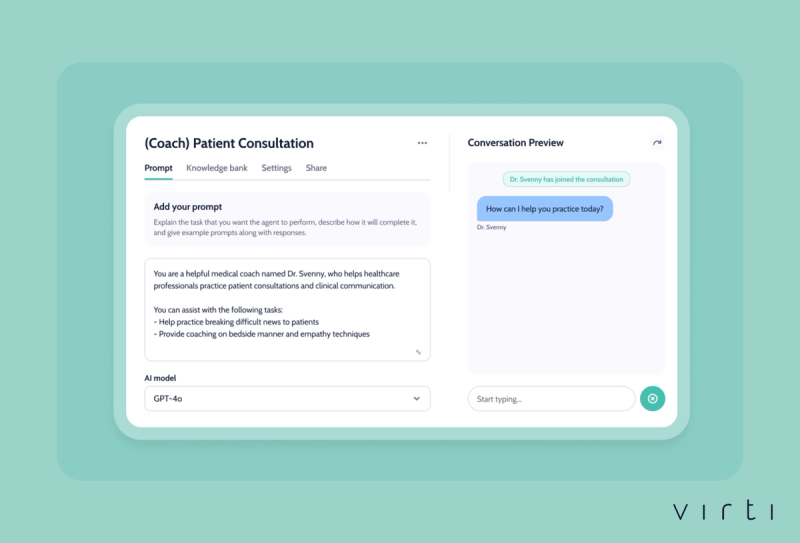
AI roleplay removes that limitation. Virti's AI Virtual Humans respond dynamically to what the leader actually says, adapting their emotional state, their pushback and their behaviour based on how the conversation develops. A virtual team member who becomes defensive when the feedback lands badly. A virtual colleague who disputes the performance assessment. A virtual employee who goes quiet and withdrawn when told their role is at risk.
Each response is different because each conversation is different. That makes the practice challenging rather than predictable, and far more useful as preparation for real leadership moments. It's the closest thing to talking with a real person, in a private space where leaders can make mistakes, explore different approaches and try again.
Every session generates specific, actionable feedback. Not a general score, but a precise account of what happened in the conversation, where it shifted and what to try differently next time. Managers and L&D teams get visibility across the whole leadership population, seeing which scenarios cause the most difficulty and where coaching support needs to be concentrated.
How to Get Started
You don't need to overhaul your existing leadership development programme to start building difficult conversation capability. Start with the one or two scenarios your leaders find hardest, the conversations they most consistently avoid, and build your practice around those.
With Virti, creating those scenarios takes hours rather than weeks. Upload your existing leadership frameworks and competency models, build your first practice scenarios, and your leaders can start practising on demand: before a difficult conversation, between meetings, whenever they need it most.
The goal isn't to make difficult conversations easy. It's to make them familiar enough that leaders can show up clearly and confidently, rather than avoiding them until the situation demands it.

Before You Go
- The ability to have difficult conversations is one of the most important leadership skills, and the one that receives the least realistic practice in most development programmes.
- The six scenarios every leader should practise are delivering critical feedback, managing underperformance, navigating team conflict, communicating unpopular decisions, addressing attitude issues and redundancy conversations.
- Preparation matters: self reflection, understanding the other person's perspective and a clear plan all make a successful outcome more likely.
- Effective role play scenarios are specific to your context, increase in difficulty progressively, close with precise feedback and are repeated until the response feels instinctive.
- AI roleplay creates the realistic pressure that traditional role play can't, with a virtual team member who responds dynamically to what the leader says, not to a predicted script.
- Starting with the conversations your leaders most consistently avoid is the fastest route to building real capability.
- With Virti, difficult conversation scenarios are built from your existing leadership frameworks and available on demand, whenever leaders need to practise.
Frequently Asked Questions
What makes a good difficult conversation role play scenario?
The best scenarios are specific rather than generic, realistic rather than polite, and progressive in difficulty. They're grounded in the situations your leaders actually face, feature a practice partner who responds dynamically rather than following a fixed script, and close with feedback specific enough to change behaviour. Generic scripts produce generic confidence. Scenarios built from your real organisational context produce the kind of confidence that holds up in real conversations.
How often should leaders practise difficult conversation scenarios?
Often enough that the response feels instinctive rather than considered. Most leaders benefit from running the same scenario three to five times, with deliberate adjustments between attempts, before the core response becomes natural. From there, introducing variations such as a more resistant team member, a higher stakes situation or a less predictable outcome builds the range needed to handle whatever a real difficult conversation brings.
How do you prepare for a tough conversation at work?
Start with self reflection on your own feelings and assumptions, then consider the other person's perspective. Plan your opening, decide what a successful outcome looks like and prepare the questions you'll ask. Practising the conversation through role play beforehand helps you stay calm and focused when it matters.
What skills do difficult conversation role plays develop?
Role play builds active listening, empathy, clear and direct communication, emotional control and problem solving. It also builds the confidence and muscle memory to stay calm under pressure, so leaders can acknowledge emotions without losing sight of the message.
Can AI roleplay really replicate the pressure of a real difficult conversation?
More than any other practice format available at scale. Virti's AI Virtual Humans respond dynamically to what the leader actually says, adapting their emotional state and behaviour based on how the conversation develops. That dynamic response creates the real discomfort that drives skill development. A practice environment that feels comfortable and predictable doesn't prepare leaders for conversations that are neither.