Two learners. Same topic. Different needs.
The first is a new customer service agent on their second day. They need to understand the process for handling a refund request: what the right steps are, what happens when they skip one, and what 'good' looks like before they face a real customer.
The second is an experienced sales rep preparing for a high stakes renewal conversation. They know the process. What they need is practice: the ability to hold their position under pressure, respond to objections they haven't heard before, and think clearly when the conversation goes somewhere unexpected.
Both learners need a Virtual Human scenario. But they need a different kind.
That is the distinction between branching scenarios and conversational scenarios. Understanding which one to use, and when to use both together, is one of the most important decisions in designing effective AI powered training.
What Is a Branching Scenario?
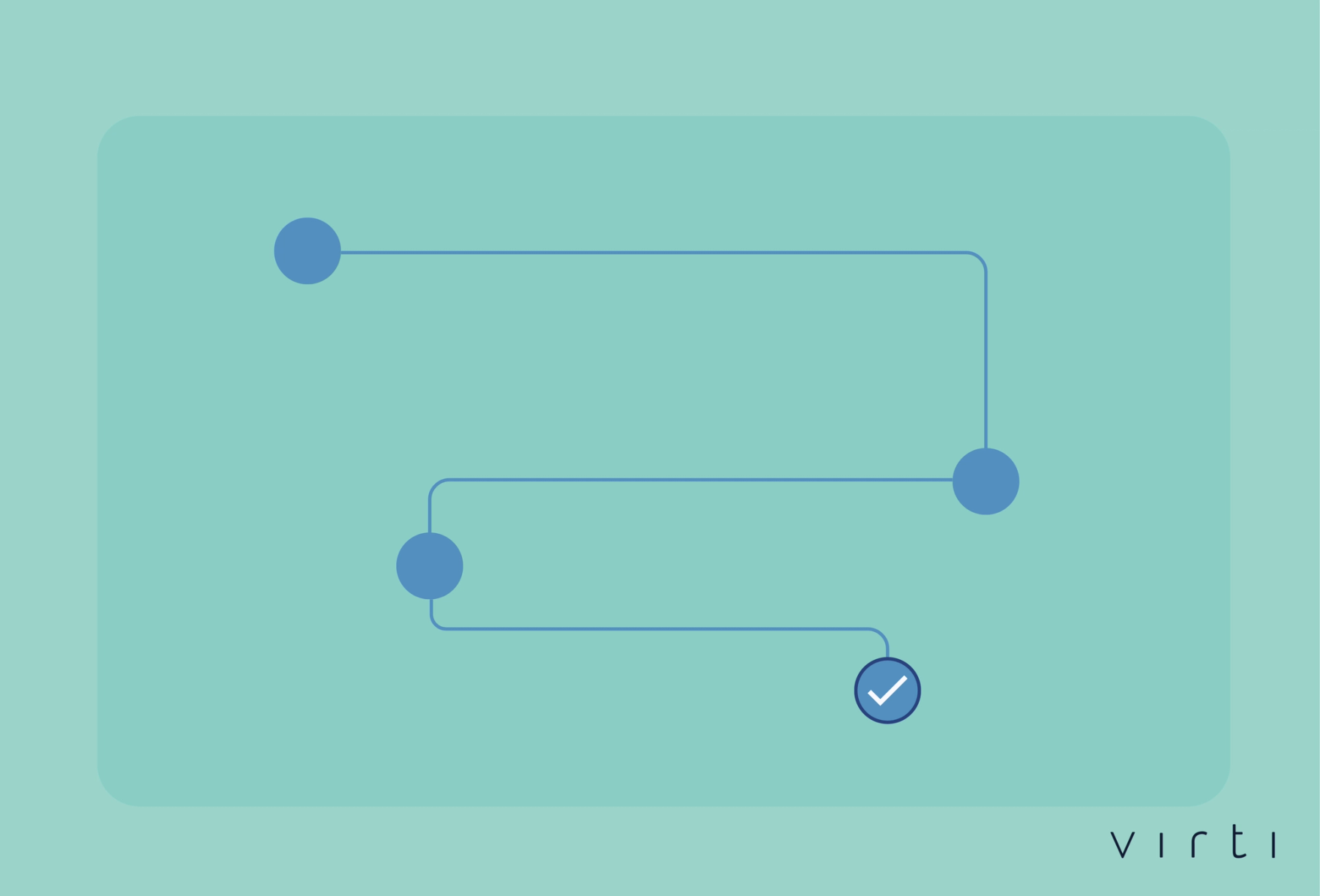
A branching scenario is a structured, choice based learning experience. The creator plans the conversation in advance: mapping out what the Virtual Human says, what options the learner can choose from, and what happens next depending on which path they take. Think of it as a choose your own adventure format, where every decision leads somewhere specific.
In Virti, branching scenarios are built using a drag and drop storyboard tool. Each node in the conversation can branch into different paths depending on what the learner selects. If they make the right choice, the Virtual Human responds accordingly and the learner earns credit against a learning objective. If they make the wrong choice, the Virtual Human demonstrates the consequence, and the learner sees exactly why that matters.
Branching scenarios can work with button based responses, where learners select from a set of options, or with typed responses, where AI matches what the learner writes to a predefined path. So the distinction is not simply clicking buttons versus having a conversation: it is about whether the experience follows a planned route the creator has designed in advance.

A simple branching scenario example
Take the refund request from earlier. The customer explains that their order arrived damaged and asks for their money back. The learner has three options: process the refund straight away, ask for a photo of the damage first, or tell the customer to contact the courier.
Each choice leads down a different path in the decision tree. Asking for evidence keeps the conversation on track and earns credit against the learning objective. Refunding immediately skips a required check, and the Virtual Human's next response shows the consequence. Passing the customer to the courier frustrates them, and the learner sees that frustration play out. Learners can replay the scenario to explore every path, which is a big part of why branching scenarios improve engagement and knowledge retention.
That structure makes branching scenarios particularly effective for:
- Introducing a concept or process for the first time
- Practising specific decisions and understanding their consequences
- Compliance and policy training where there is a clear right and wrong answer
- New hire onboarding where consistency of learning matters
- Beginner level learners who need scaffolding before open ended practice
The core value of a branching scenario is clarity. Learners understand what they are being asked to do, why their choices matter, and what good looks like. That foundation is what makes more advanced practice possible later.
What Is a Conversational Scenario?
A conversational scenario is an open ended exchange between the learner and an AI powered Virtual Human. There are no preset response options and no fixed script. The learner responds in their own words, by typing or speaking, and the Virtual Human adapts dynamically to what they say.
The creator sets the context: who the Virtual Human is, what the scenario is about, what the learning objectives are, and how the character should respond within that context. But the conversation itself is not planned in advance. It develops based on what the learner actually says and how the Virtual Human responds to it.
That flexibility is what makes conversational scenarios so effective for practising communication. A sales rep can handle an objection they have never encountered before. A manager can navigate a performance conversation that goes in an unexpected direction. A clinician can practise breaking difficult news to a patient who responds with distress rather than acceptance. The Virtual Human responds to the reality of the conversation, not a predicted version of it.
Conversational scenarios are particularly effective for:
- Practising difficult conversations under realistic pressure
- Sales roleplay: objection handling, negotiation, discovery calls
- Leadership and management conversations: feedback, underperformance, conflict
- Clinical communication: patient conversations, clinical handovers, sensitive disclosures
- Advanced learners who already understand the concept and need to build confidence in applying it
The core value of a conversational scenario is realism. The learner cannot predict what comes next, which means they have to think, adapt, and respond, exactly as they would in a real interaction.

How They Differ
The clearest way to understand the difference is this:
Branching scenarios practise making the right decisions. Conversational scenarios practise having the right conversations.
Both involve a Virtual Human. Both put the learner in a realistic situation. But the nature of the learning experience is different in several important ways.
Creator control vs learner flexibility
In a branching scenario, the creator defines the possible paths in advance. The experience is structured and consistent: every learner moves through the same decision points, even if they take different paths. In a conversational scenario, the learner drives the exchange. The creator sets the context and the character, but the conversation goes where it goes.
Structured decisions vs open ended communication
Branching scenarios are designed around specific choices and their consequences. They are most effective when there is a right answer and it matters that the learner finds it. Conversational scenarios are designed around the quality of communication: tone, language, adaptability, composure under pressure. There is no single right answer, but there is a better and a worse way to handle the moment.
Beginner vs advanced learning
Branching scenarios work well for learners who are new to a topic and need a structured environment to develop foundational understanding. Conversational scenarios work best for learners who already have that foundation and need to practise applying it in unpredictable conditions.
Feedback type
In a branching scenario, feedback is tied to specific choices: the learner knows immediately whether they made the right decision and why. In a conversational scenario, feedback comes at the end of the session: a detailed assessment of how the learner communicated, where the conversation went well, and what to try differently next time.
When to Use Branching Scenarios
Branching scenarios are the right choice when the goal is structured decision practice: when you need learners to understand a process, follow a procedure, or recognise the consequences of specific choices before they encounter them in the real world.
Use branching scenarios for:
New hire onboarding
Introduce processes, policies, and procedures in a structured environment where learners can explore the consequences of different decisions without real world risk. A branching scenario can walk a new customer service agent through a refund process, showing exactly what happens when each step is followed correctly, and what goes wrong when it isn't.
Compliance training
When there is a clear right answer and it matters that learners find it, branching is the right format. The structured nature of the experience ensures every learner encounters the same decision points and receives consistent feedback on their choices.
Concept introduction
Before a learner can practise a skill in an open ended environment, they need to understand what good looks like. Branching scenarios provide that foundation: a safe, scaffolded space to develop understanding before the pressure of a real conversation is introduced.
Knowledge checks and assessments
Because branching scenarios track which choices learners make and assign point values to those choices, they are effective for measuring whether a learner understands a concept well enough to apply it.
When to Use Conversational Scenarios
Conversational scenarios are the right choice when the goal is flexible communication practice: when you need learners to build the confidence and adaptability that only comes from navigating a real exchange under realistic pressure.
Use conversational scenarios for:
Difficult conversations
Feedback, underperformance, conflict, redundancy: conversations where the emotional dynamic is as important as the content, and where the learner needs to think on their feet rather than select from a set of options.
Sales roleplay
Objection handling, negotiation, discovery calls, competitive positioning: any sales conversation where the prospect can take the discussion somewhere unexpected and the rep needs to respond in the moment.
Clinical communication
Patient conversations, breaking difficult news, navigating a distressed or resistant patient: scenarios where the quality of communication directly affects the outcome and where realistic pressure is essential to meaningful practice.
Leadership development
Coaching conversations, communicating through change, managing performance: conversations that define how a leader is experienced by their team, and that require practice under conditions that feel genuinely human.
Using Both Together
The most effective training programmes do not choose between branching and conversational scenarios: they use both, in sequence, as part of a deliberate learning journey.
Branching first. Conversational next.
Start with a branching scenario to introduce the concept, build foundational understanding, and give learners a clear picture of what good decisions look like and why they matter. Then move to a conversational scenario to practise applying that understanding in a realistic, open ended environment where the learner has to think, adapt, and respond without a safety net.
A new manager learning to handle underperformance conversations might start with a branching scenario that walks them through the key decision points: when to escalate, how to document, what not to say. Once they understand the framework, a conversational scenario puts them in the conversation itself, with a virtual team member who responds to what they actually say rather than what they were expected to say.
That combination, structured decision practice followed by flexible communication practice, is what turns knowledge into capability.
How to Get Started With Virti
Both branching and conversational scenarios are available on the Virti platform, built using the same no code tools, from the same content you already have.
Start by identifying what your learners need most right now. If they are new to a topic and need to build foundational understanding, start with branching. If they already understand the concept and need to build confidence in applying it, start with conversational. If you want to take them through both, the platform supports that as a single connected learning journey.
Scenarios can be built from a simple prompt or from your existing training materials, scripts, and frameworks, and updated instantly as your content evolves.

Frequently Asked Questions
Can branching and conversational scenarios be used for the same topic?
Yes, and using both together is often the most effective approach. A branching scenario introduces the concept and gives learners structured practice in the key decisions involved. A conversational scenario then puts them in a realistic open ended exchange where they have to apply what they have learned under genuine pressure. The two formats complement each other rather than competing.
Do I need technical expertise to build either type of scenario in Virti?
No. Both branching and conversational scenarios are built using Virti's no code tools. Branching scenarios use a drag and drop storyboard builder. Conversational scenarios are created by defining the context, the Virtual Human character, and the learning objectives: no coding or specialist development skills required. Most teams can build and launch their first scenario within hours.
How does feedback work differently in branching versus conversational scenarios?
In a branching scenario, feedback is immediate and tied to specific choices: learners know straight away whether they made the right decision and why it matters. In a conversational scenario, feedback comes at the end of the session and covers the quality of the communication overall: what the learner did well, where the conversation shifted, and what to try differently next time. Both types of feedback are specific and actionable, but they measure different things.
What are branching scenarios used for?
Branching scenarios are used wherever learners need to practise decisions with clear consequences. Common examples include compliance training, new hire onboarding, customer service processes, sales qualification, and healthcare and emergency services training, where following the right procedure matters. They are a form of scenario based learning that lets people practise in a risk free environment before they face the real situation.