Your sales pitch can make or break a deal. It’s the moment where all your product knowledge, research, and charm need to come together in a way that resonates with a prospect and gets the prospect excited to move the sales process forward. But here’s the problem: most people only practice their pitch in front of a mirror or worse, on real customers. That’s risky, inconsistent, and rarely effective.
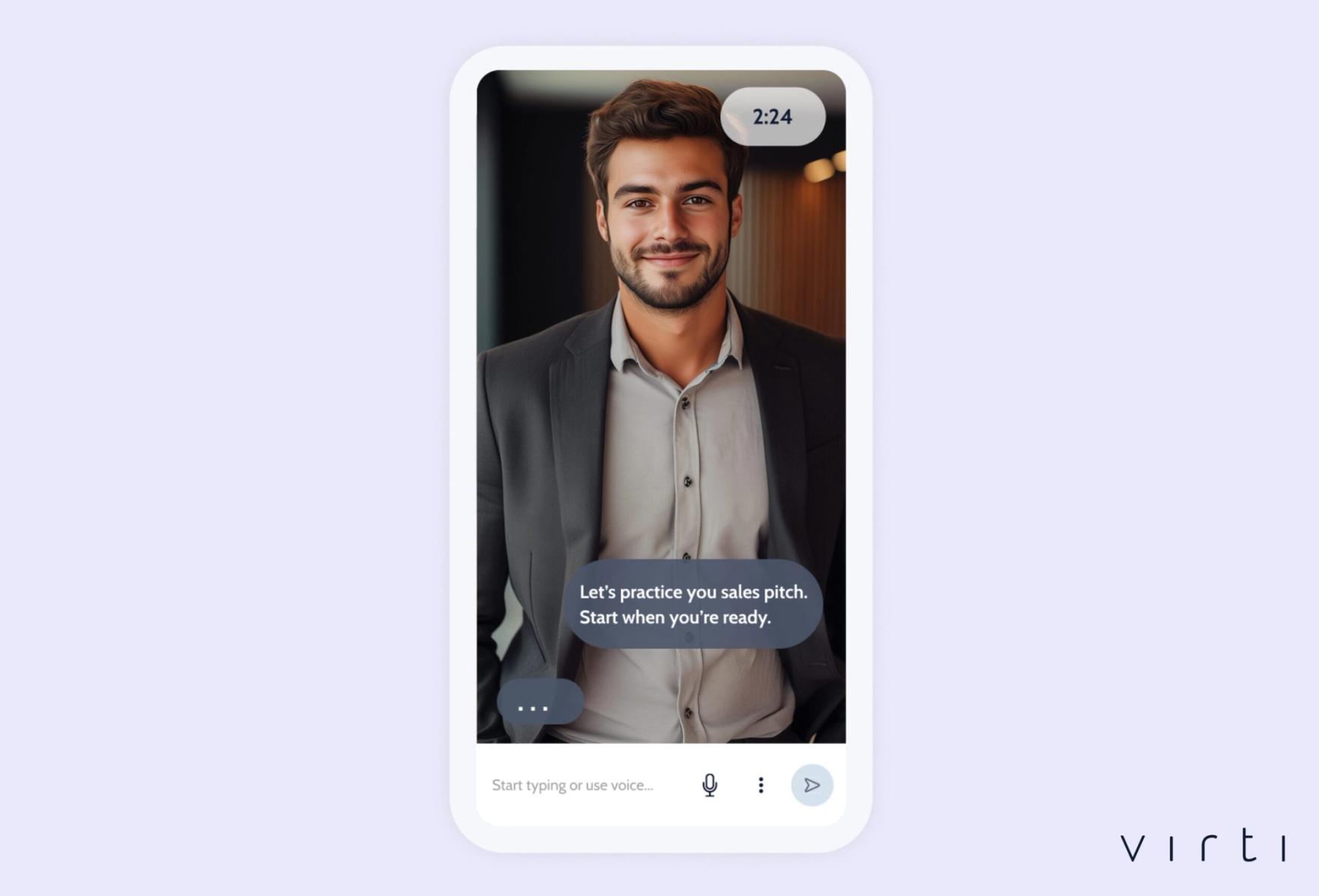
Using AI role-play can change everything. Instead of waiting for the perfect time to deliver your best sales pitch, sales reps can now rehearse their pitch anytime, anywhere with realistic Virtual buyers who react, question, and even push back just like real prospects would. The result? Sharper delivery, greater confidence, and pitches that actually convert.
What is a Sales Pitch?
At its core, a sales pitch is a short, persuasive conversation designed to spark interest and move a potential customer closer to buying. It’s not just rattling off product features, it’s about solving a problem, connecting with the prospect’s needs, and clearly communicating your value proposition. Crafting an effective opening line is crucial, as it sets the first impression and can determine whether you capture the prospect’s attention immediately.
A strong pitch is:
- Clear – explains what you do in simple terms.
- Concise – delivers value without overwhelming with detail, focusing on the key points that matter most to the prospect.
- Compelling – highlights why your solution matters to the listener’s pain points, not just why it’s great in general.
In addition, a compelling narrative and highlighting your unique selling points can make your pitch stand out and resonate more deeply with your audience.
Think of it as your opening handshake in the sales journey, some often call it an elevator pitch too (a condensed sales presentation you can deliver within the time of a single elevator ride). Done right, it builds trust and earns you the right to go deeper into the conversation. Done poorly, it closes doors before they’ve even opened.

Why practicing your sales pitch matters
Even the best sales reps don’t nail their pitch the first time. Like any performance, sales conversations improve with practice. Without preparation, sales pitches can sound scripted, rushed, or worse, unconvincing.
Practicing your sales pitch helps you:
- Build confidence – the more familiar you are with your words, the easier it is to stay calm under pressure.
- Adapt on the fly – rehearsed reps can pivot when prospects raise objections or ask tough questions.
- Avoid jargon – refining your pitch keeps it clear and natural instead of robotic or overloaded with buzzwords.
- Stay consistent – teams that practice as a sales team deliver a unified message, reinforcing brand credibility.
Regular practice leads to more effective sales pitches and helps build stronger customer relationships by ensuring your message is engaging and personalized.
Practicing your pitch is a crucial part of mastering the overall sales process.
Traditional Ways to Practice a Sales Pitch
Before AI role-play, practicing a sales pitch usually meant one of three things: rehearsing alone, role-playing with peers, or waiting until you’re in front of a real customer. Networking events were also common situations where a well-rehearsed elevator pitch is essential for making a strong first impression.
Each has its value, but also clear limitations. Rehearsing alone helps with memorization, but it can feel flat and doesn’t prepare you for unpredictable questions or objections.
Practicing with peers or managers is better because you get feedback, and it allows you to practice the entire pitch, including using tools like a pitch deck or sales decks, yet it’s often limited by time, availability, and the willingness of others to role-play authentically.
The riskiest option, of course, is practicing on actual prospects, a high-stakes approach where every mistake could cost you credibility or even the deal.
Traditional methods help build a foundation, but they rarely mimic the pressure, unpredictability, and dynamics of real-world sales conversations with prospective clients.
How AI Role-Play Transforms Sales Pitch Practice
Unlike traditional sales pitches, AI role-play takes sales training beyond rehearsed scripts and guesswork. By simulating realistic buyer interactions, it allows reps to practice having successful sales pitches in an environment that feels authentic, without the pressure of losing a deal. AI also adapts to tone, phrasing, and strategy in real time, giving salespeople immediate feedback on how their pitch or sales presentation lands.
Here’s how AI role-play makes a difference:
- Realistic buyer reactions – Like business buyers, virtual prospects ask questions, raise objections, and show skepticism, just like real customers.
- Safe space to fail – Reps can make mistakes, experiment with approaches, and refine without risking revenue.
- Personalized feedback – AI highlights filler words, clarity issues, and delivery tone, offering suggestions for improvement.
- Scalable practice – Every team member can train consistently without relying on a manager or peer’s availability.
- Scenario variety – From short elevator pitches, a phone sales pitch, to full product demos, reps can practice different formats anytime, including pitches tailored to different buyer personas and follow up pitches.

Using Virti to Create a Successful Sales Pitch
Virti makes sales pitch practice practical, repeatable, and measurable. Instead of rehearsing the perfect sales pitch in a vacuum, sales reps can role-play with AI-driven Virtual Humans that behave like real customers, curious, skeptical, or even challenging. This creates a dynamic training environment that mirrors real-world calls and meetings.
With Virti, sales teams can:
- Rehearse calls with AI voice agents – perfect for practicing phone sales pitches and conversations and handling objections under pressure.
- Engage with Virtual Humans – simulate face-to-face meetings where body language, tone, and phrasing matter just as much as content.
- Re-run scenarios – reps can retry the same pitch, including various sales pitch examples and sales pitch templates, until they’re confident, fine-tuning language and delivery with each attempt.
- Get instant feedback – built-in analytics highlight clarity, filler words, and confidence levels, helping salespeople make measurable progress, including practicing clear calls to action.
- Scale training across the team – every rep can practice independently, ensuring consistency without overloading sales managers with coaching duties and freeing up sales managers for more strategic coaching.
Practice scenarios can also incorporate customer testimonials and examples from existing customers to build credibility and reinforce value.
Sales pitch examples you could train
1. Cold Call Introduction (AI Voice Agent)
- What it is: A 60–90 second opening where the rep must grab attention and earn a follow-up. This is your chance to deliver a strong phone pitch, quickly highlight how you understand the prospect’s company, and suggest a quick call to further discuss how you can address the specific pain point or challenge the prospect faces.
- Learning goals: Clear value statement, relevance hook, confident pacing. Focus on identifying prospective customers’ pain points, tailoring your message to the prospect’s company, and capturing the prospect’s interest right away.
- How to practice in Virti: Run multiple voice-agent sessions that vary prospect tone (busy, curious, skeptical). Practice adapting your phone pitch to different scenarios and test how well you can spark the prospect’s interest in a quick call. Review analytics for talk-time, interruptions, and filler words.
- Measure success: Higher “ask for next step” rate and reduced hesitation/fillers, indicating more successful sales pitches and effective sales pitches.
2. Price Objection Handling (Virtual Human)
- What it is: A mid-funnel conversation where a prospect pushes back on cost. This is an opportunity to demonstrate your understanding of customer pain points, the prospect’s decision making, and their buying process.
- Learning goals: Value framing, anchoring, negotiating without discounting. Address the prospect’s company context, highlight how your solution solves prospective customers’ pain points, and show empathy for the specific pain point the prospect faces.
- How to practice in Virti: Use branching scenarios so the prospect escalates objections if the rep uses weak tactics. AI flags language that reduces perceived value and suggests alternatives.
- Measure success: More reps use value-based responses and convert objections into next-step commitments, demonstrating the ability to deliver a successful sales pitch and an effective sales pitch.
3. Email Sales Pitch Example
- What it is: Practice crafting a concise, personalized email sales pitch that clearly addresses the prospect’s company and their pain points.
- Learning goals: Personalization, clarity, and relevance. Focus on tailoring your message to the prospect’s company, highlighting how your solution addresses what the prospect faces, and sparking the prospect’s interest.
- How to practice in Virti: Write and send sample email sales pitches to simulated prospective customers. Use feedback to refine your approach and test different sales pitch ideas.
- Measure success: Higher open and response rates, indicating a compelling sales pitch and effective sales pitches.
4. Product Pitch Practice
- What it is: Deliver a focused product pitch that highlights key features and benefits relevant to the prospect’s company and their pain points.
- Learning goals: Clarity, relevance, and benefit-driven messaging. Address prospective buyers’ needs and show how your product solves the pain point the prospect faces.
- How to practice in Virti: Present your product pitch to simulated potential clients and prospective customers, adjusting based on their feedback and objections.
- Measure success: Increased engagement and requests for demos, showing the impact of a great sales pitch and a good sales pitch.
Why your sales reps shouldn’t wait
The longer sales teams go without practicing, the harder it becomes to spot weaknesses and build confidence. Every unpolished pitch risks a lost opportunity. With AI role-play, there’s no need to wait for scheduled workshops or coaching sessions, training happens instantly, in the flow of work.
That means your reps can practice high-stakes conversations today, refine their delivery tomorrow, and walk into their next pitch with confidence. Practicing follow up pitches and scheduling a follow up meeting are crucial steps that help move deals forward by re-engaging prospects and advancing the sales process. The earlier you start, the faster your team builds consistency and closes more deals.
Virti makes it easy to get started. By combining realistic scenarios with instant feedback, your sales rep can practice how a salesperson explains key points clearly and persuasively to capture the audience’s attention. Your salespeople don’t just learn theory — they practice until their pitch sticks.